Preennial of Water // È arrivata l’acqua

June 23 – July 7, 2024

Ex-Lanificio, Scala A 2°Piano, Porta Capuana, Naples

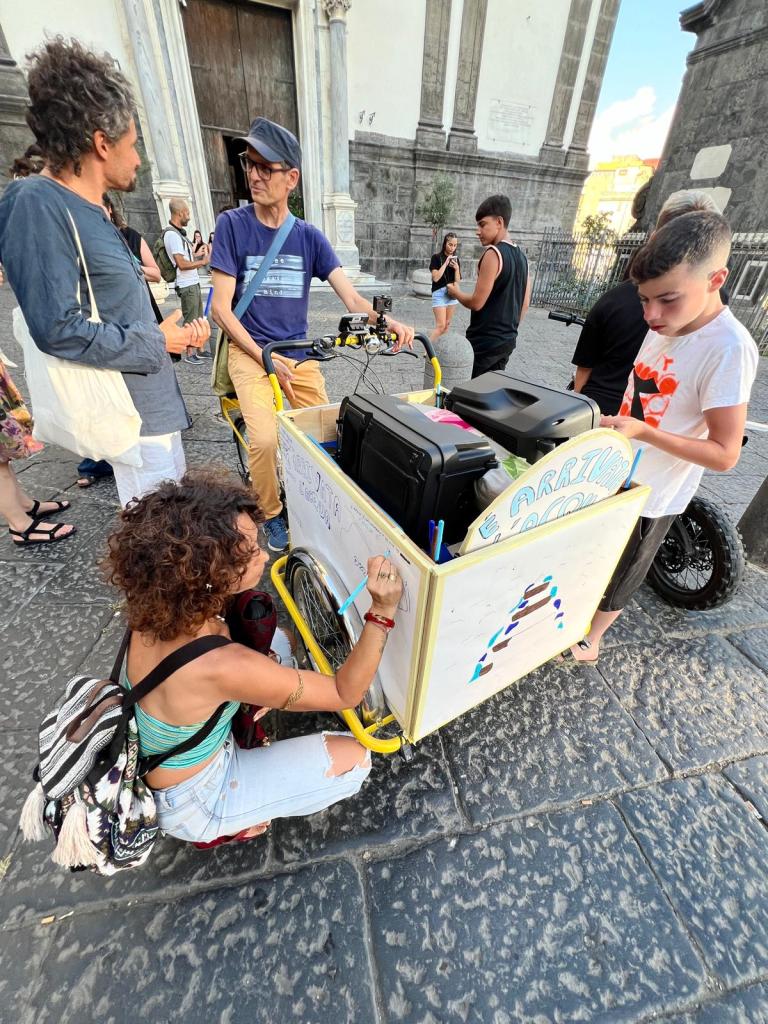
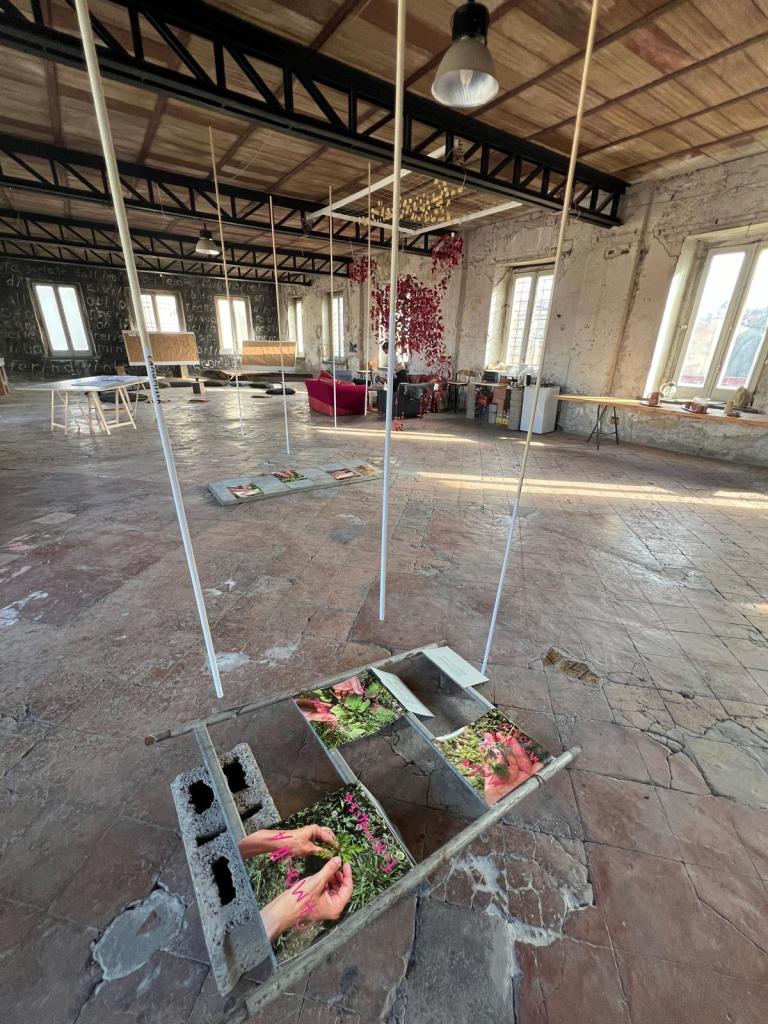
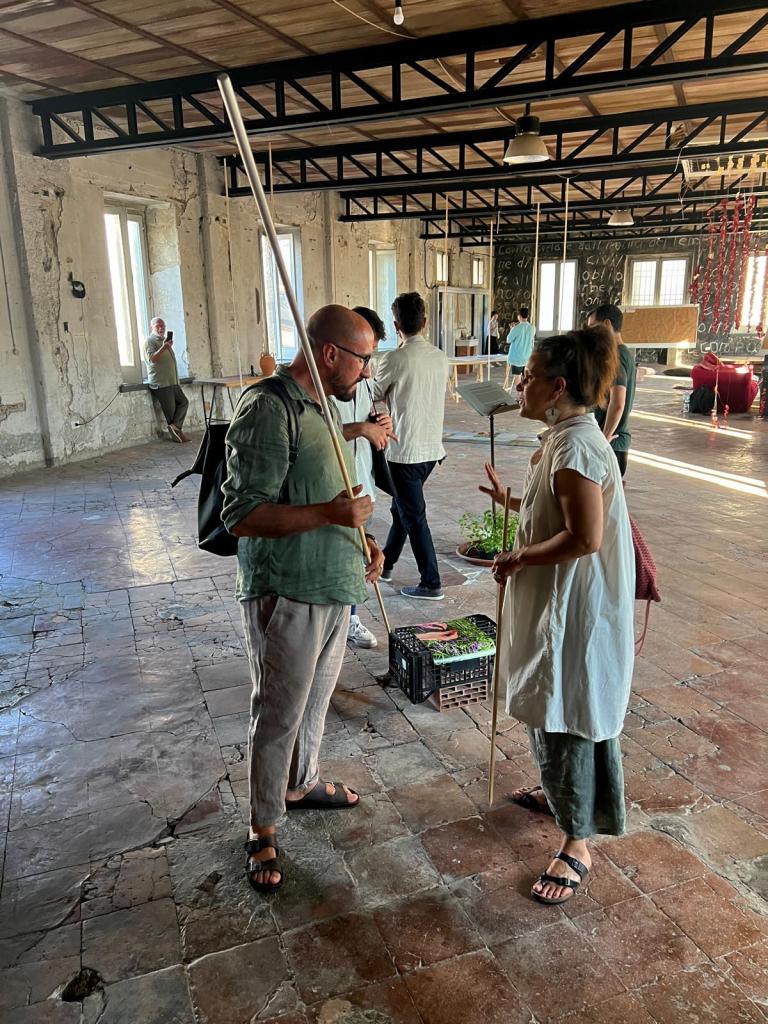
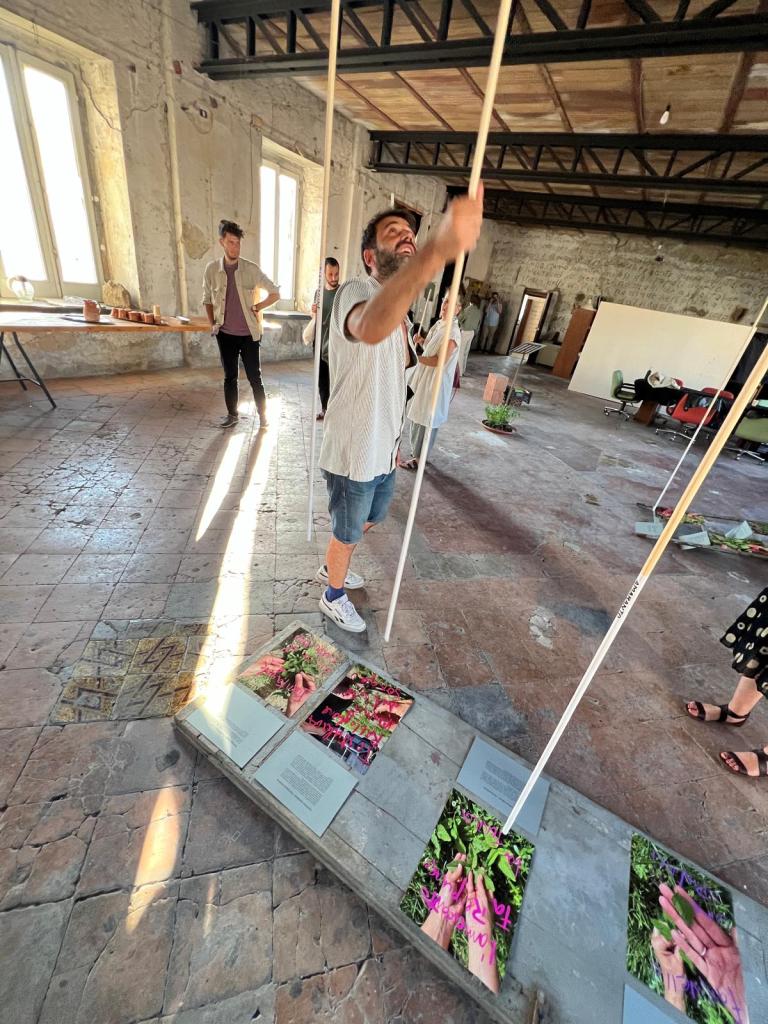
The Preennial of Water is a trans-disciplinary gathering that explored local and international relations to create a new grassroots Biennale of Water that will take place in Naples in 2026. The leading partners of the project invited artists, architects, activists, writers, researchers, designers, planners and others to imagine, discuss, create and design effective and durable responses to a range of social and environmental issues relating to water. In the context of the Commoning Lab, many stories, interests, practices and desires emerged. On July 4th, the collective reflections have been presented via the exhibition È arrivata l’acqua to which the community activated during the workshop contributed.

The partners leading this long term project are: Laboratorio Architettura Nomade, CoolCity, Commonspace, Common Views, together with Casaforte, ABC Water Company, Made in Cloister, Laboratorio di Urbanistica e Progettazione Territoriale University Federico II Naples.

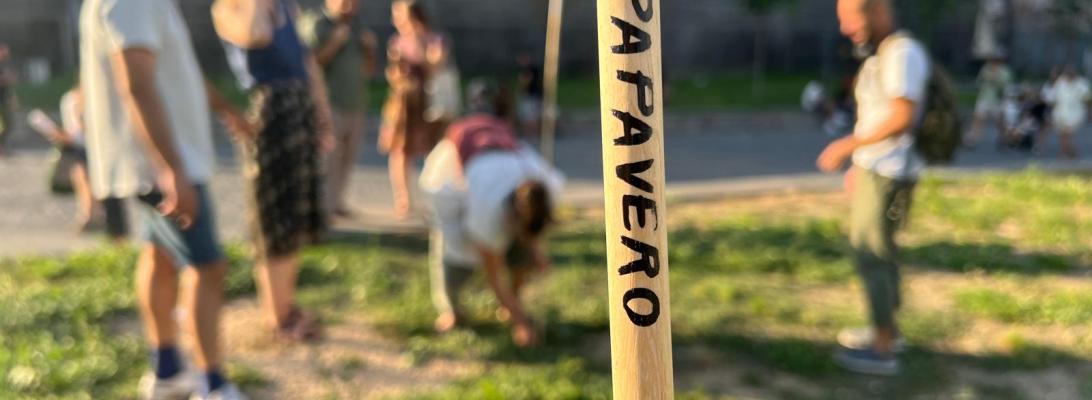
wild edibles

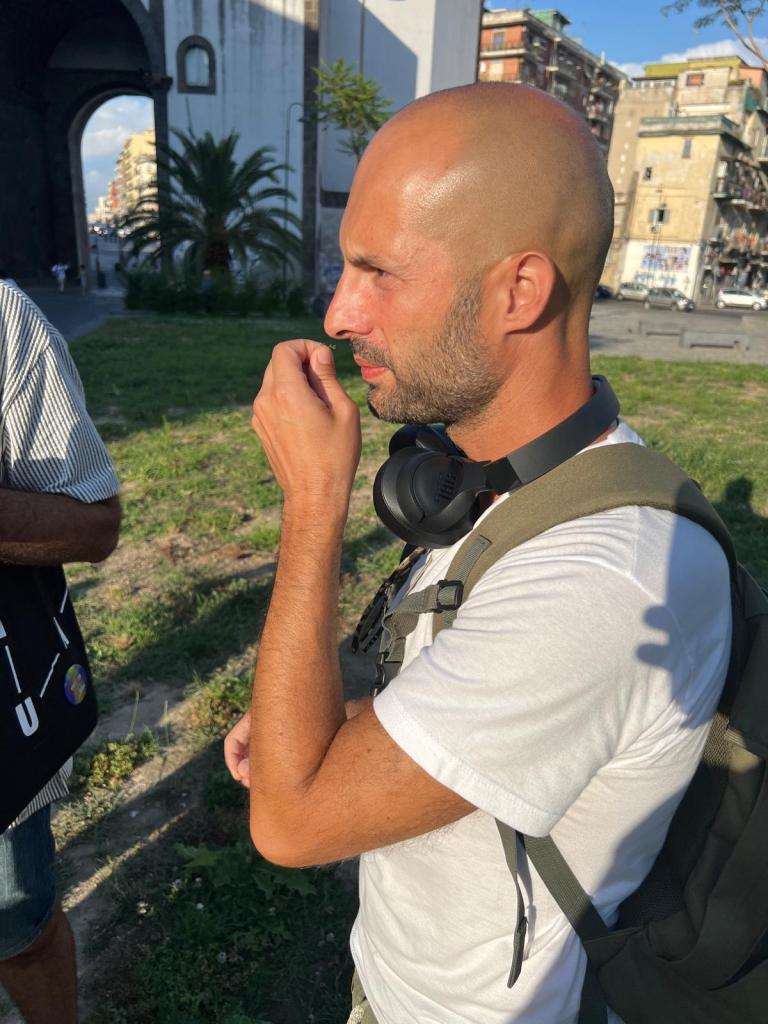
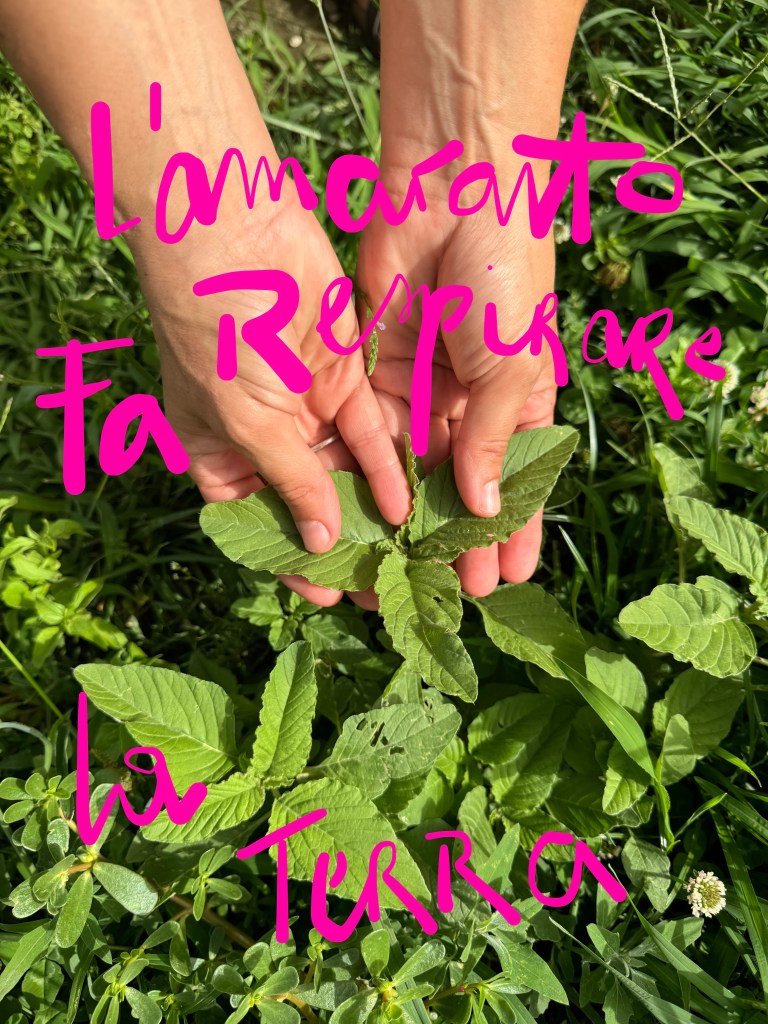
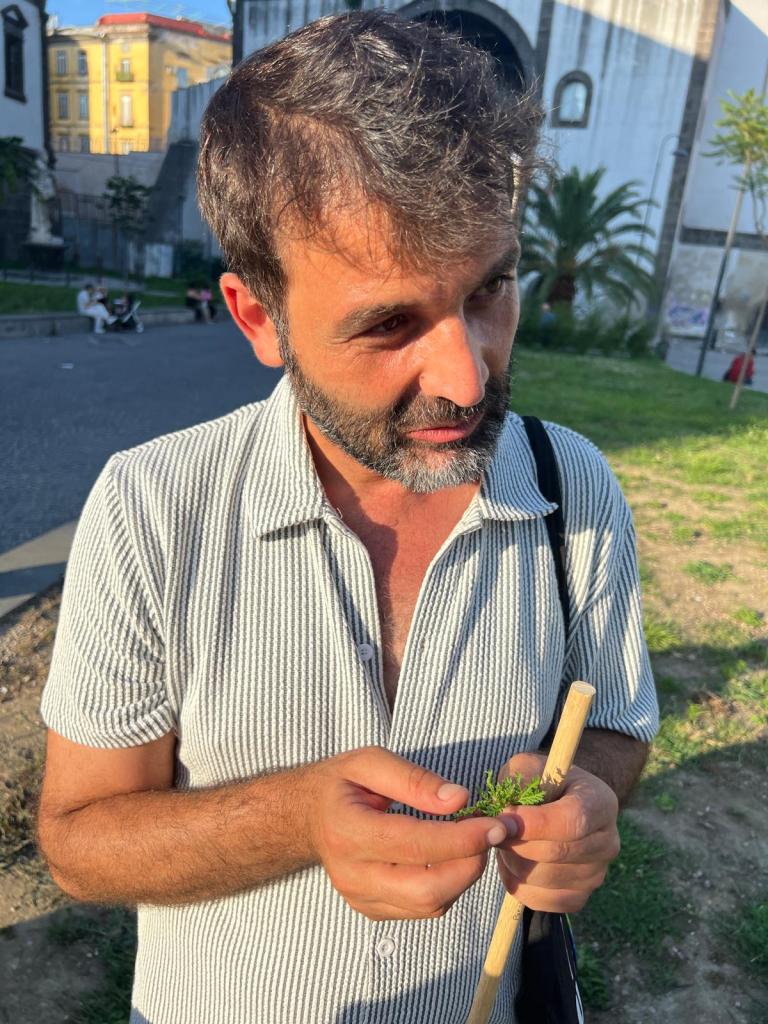
Together with Ali Kemal Ertem (Maquis Projects), we proposed to the visitors to transform a meadow in front of Porta Capuana in to a (most likely ephemeral) botanical garden of wild edible herbs. This action, Wild Edibles is a simple seed we hope will sprout in some unpredictable way. The action roots in Ali Kemal’s Maquis Project and has born in conversation with Maria Pina Usai during the Common Lab.

The aim of this small intervention is to create, nurture and promote knowledge about a local, drought-resistant foragable zone. To achieve this, we are designating this small park as an extension of the formal institutional botanic garden of Naples.

In doing so we hope to highlight the potential of this humble site as a valuable study area in the city, serving as an experimental resource for all who experience it, and demonstrating the resilience and ecological benefits of native plant species. This will underscore the importance of drought-resistant indigenous flora in sustainable landscape planning for liveable cities. It is particularly important as it relates to water management by city authorities at a time when the stress of our changing climate and related water supply scarcities are causing many city authorities to limit or ignore water needs of parks and public water amenities. The degradation of these amenities can only add to the sense of public anxiety related to climate change.

The dry fountain that stands close to the site of our action serves as one more reminder of the ecological crisis which the world faces right now. Our project aims to contribute to a healing process – as we reconsider and plan our cities in a way that respects and works in harmony with the land, water, flora and fauna around us. ‎
SOTTO LO STESSO ALBERO

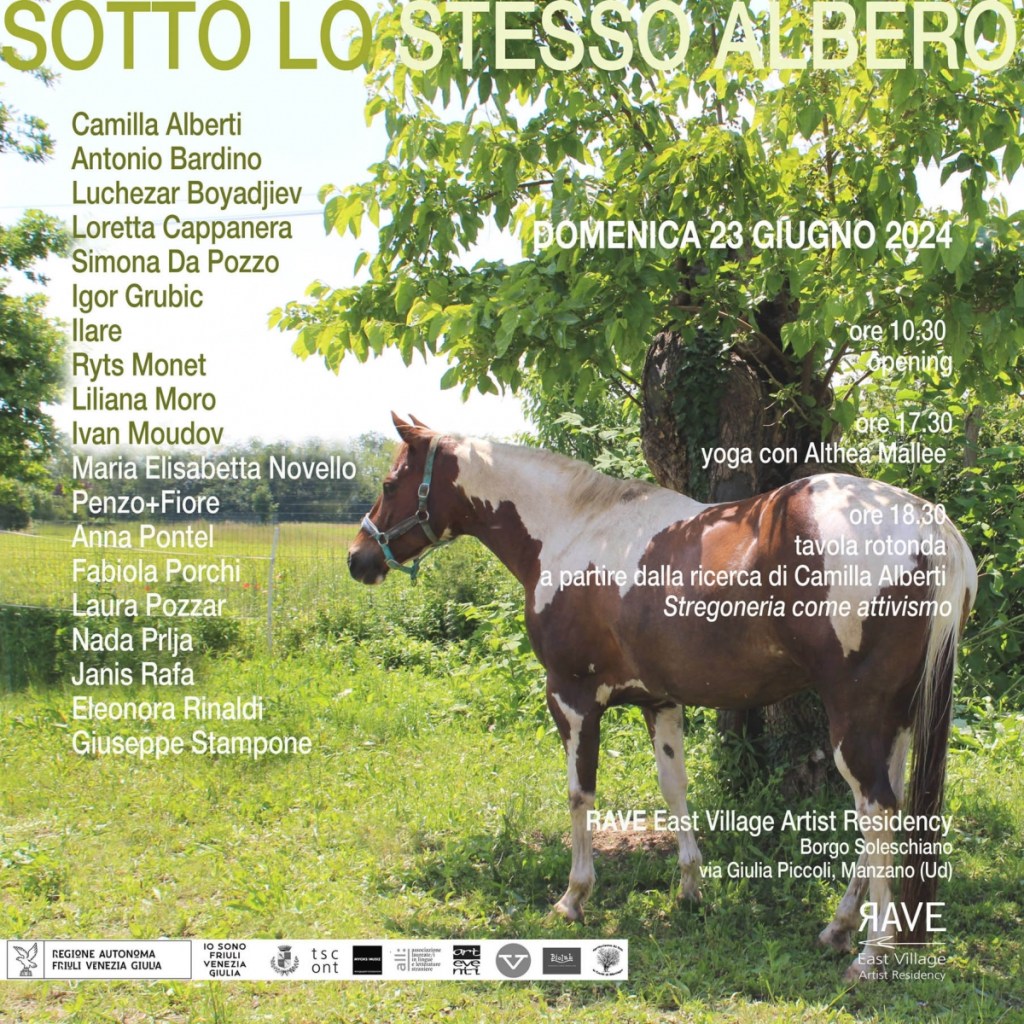
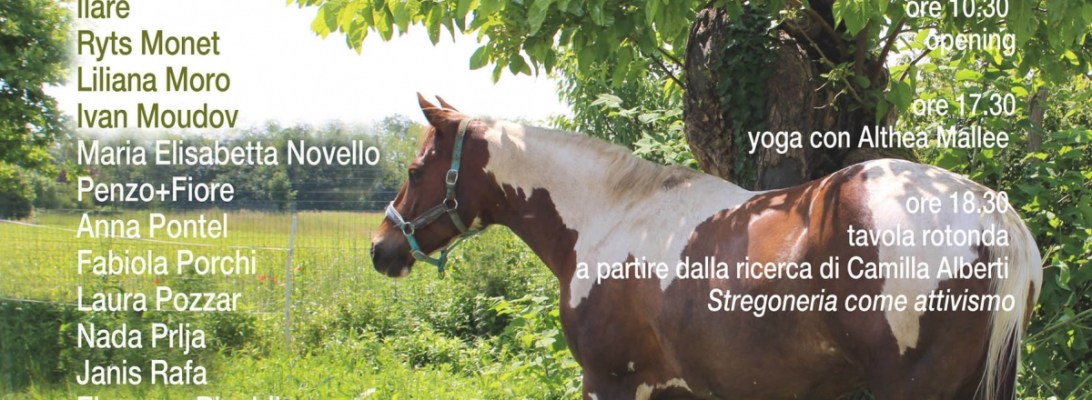
On the 23rd of June RAVE 2024 comes to life with the opening of the collective exhibition Under the same tree.

The exhibition is physically rooted in the historic village of Soleschiano di Manzano, among the old stone houses and centuries-old plants. 
The participating artists are: Camilla Alberti, Antonio Bardino, Luchezar Boyadjiev, Loretta Cappanera, Simona Da Pozzo, Igor Grubić, Ilare, Ryts Monet, Liliana Moro, Ivan Moudov, Maria Elisabetta Novello, Penzo+Fiore, Anna Pontel, Fabiola Porchi, Laura Pozzar, Nada Prlja, Janis Rafa, Eleonora Rinaldi, Giuseppe Stampone.


RAVE deals with the role of contemporary art in relation to the need to rethink ourselves through biocentrism and antispeciesism. It is curated by Tiziana and Isabella Pers.

ARTE DAL VIVO

On 7 June, the course undertaken with the students of the Liceo Vico as part of Arte dal Vivo concludes with the presentation of the artistic process, documented under the direction of Rosa Maietta, and the permanent work at the institute: Half a Flood (o l’arte di misurare piene invisibili).

Brac. Book Recipes Artists Cooking’

Presentation tour of ‘Brac. Book Recipes Artists Cooking’: 17th May MamBo; 19th May Podere Castellare; 24th May Cremona Contemporanea Art week; 25th May La casa degli artisti, Milan.

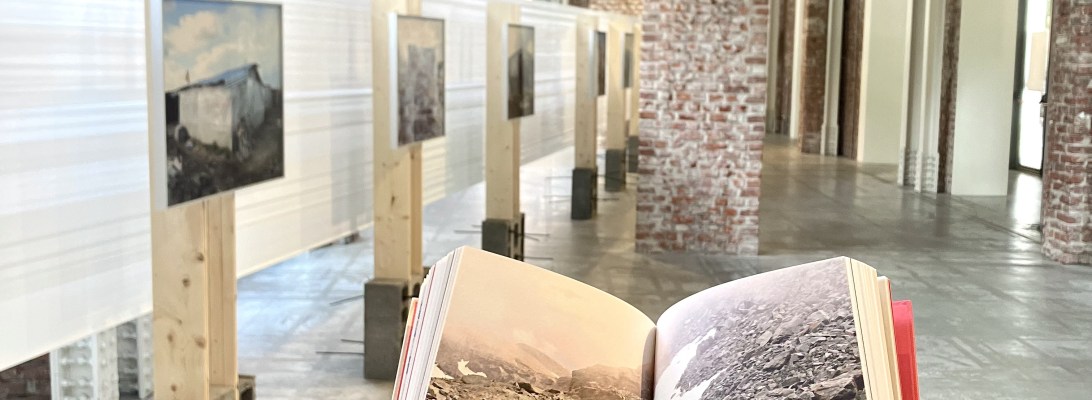
The book, published by Corraini, brings together vegan and vegetarian recipes by chef Sacha Sandri Olmo and 78 works by the artists who revolve around the contemporary art bookstore Brac. A marvellous object to which I contributed the photograph Prelievo Orientale, part of the Orbital View project, which I associated with the culinary prodigy Seitan Masala.

image on the right: the book hold by Susanna Ravelli on the “Prelievo Orientale” page at Casa degli Artisti during the exhibition “Home”.

For fifteen years, the BRAC Bookshop in Florence has been combining good vegetarian and vegan cuisine and publishing dedicated to the languages of contemporary art. A formula that is an expression of the passions of the two owners, Sacha and Melisa: an imaginative chef specialising in vegetarian and vegan cuisine who is in love with comics and illustration, and a bibliophile with an interest in contemporary art in all its forms of expression (art, theatre, dance, cinema, photography).

Since its opening in 2009 to date, the Brac has organised and hosted around 1,800 meetings and book presentations, promoted and realised several festivals, events and exhibitions. This volume collects 80 recipes, born and served within the BRAC, entrusted to the free interpretation of 78 contemporary artists.

“They include all of Scripta’s guests – as Pietro Gaglianò writes – as well as beloved friends, regular visitors to the bookshop and its events, people who have passed through and who remain ever-present, together with others who have never been to Brac but who, through virtuous or virtual ties, through friendship or out of affinity, form a fundamental part of its universe of art, books and words”.

INTERSPAZIO

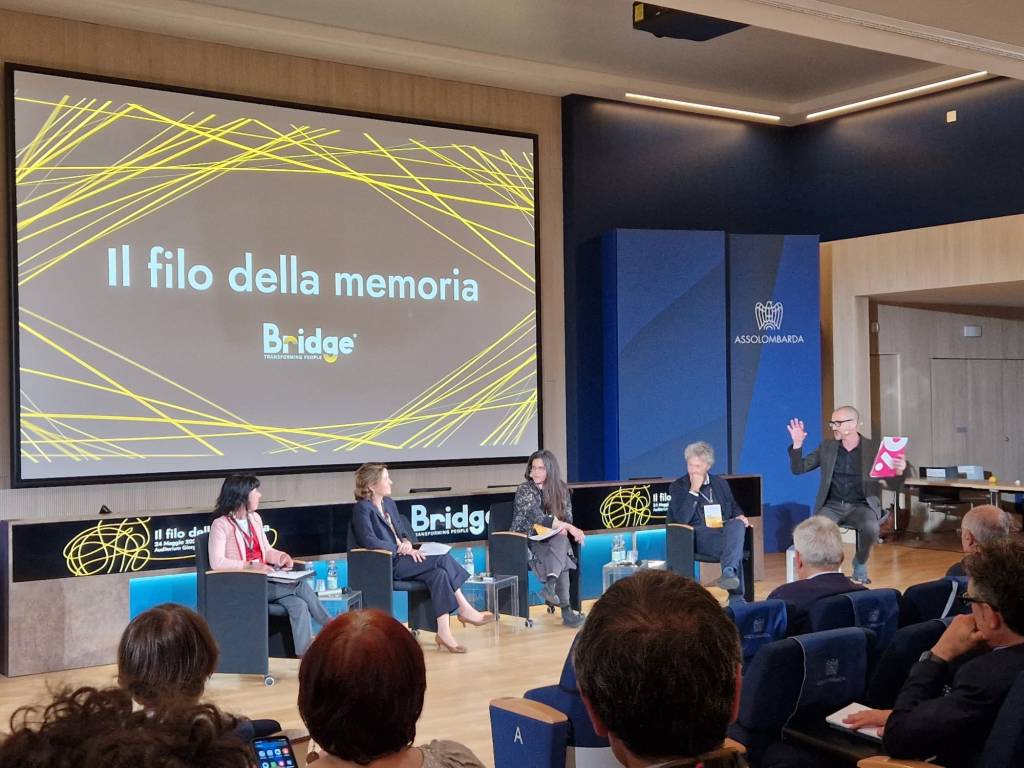
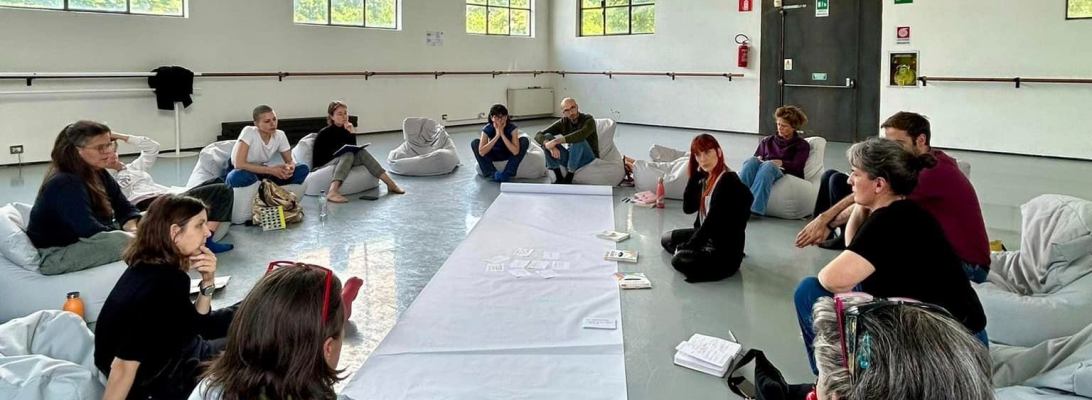
First two stages of the INTERSPAZIO project: from 11 to 17 May atelier and residency at Orlando Festival, Bergamo, and at Lavanderia a Vapore, Collegno.

INTERSPAZIO involves multidisciplinary artstə, operatorə and curatorə, with a focus on the languages of performance and the body, in a shared collective research on the theme of the ‘public’ in its plastic and multifaceted articulation.
Public is understood in its broad meaning as a space but also as a statute, as a political function and as a group of people that bypasses the act of fruition and is instead constituted as a temporary aggregate: a redefinition that involves artists and artists and curators who are confronted with the call to transform their own methods and practices in order to arrive at new forms of mediation and relationship with the present context and with the invisible or absent one.
The project is articulated over the course of 2024 within the framework of the programmes curated by the five call promoters: Orlando Festival (Bergamo, May), Lavanderia a Vapore (Collegno – Turin, May), Invisible Cities (Gorizia, September), Intercettazioni – Centro di Residenza Artistica della Lombardia / Zona K (Milan, October), Periferico Festival (Modena, October). The artists involved in the process are: Tea Andreoletti, Giovanna Rovedo and Simona Da Pozzo

Negozio #7

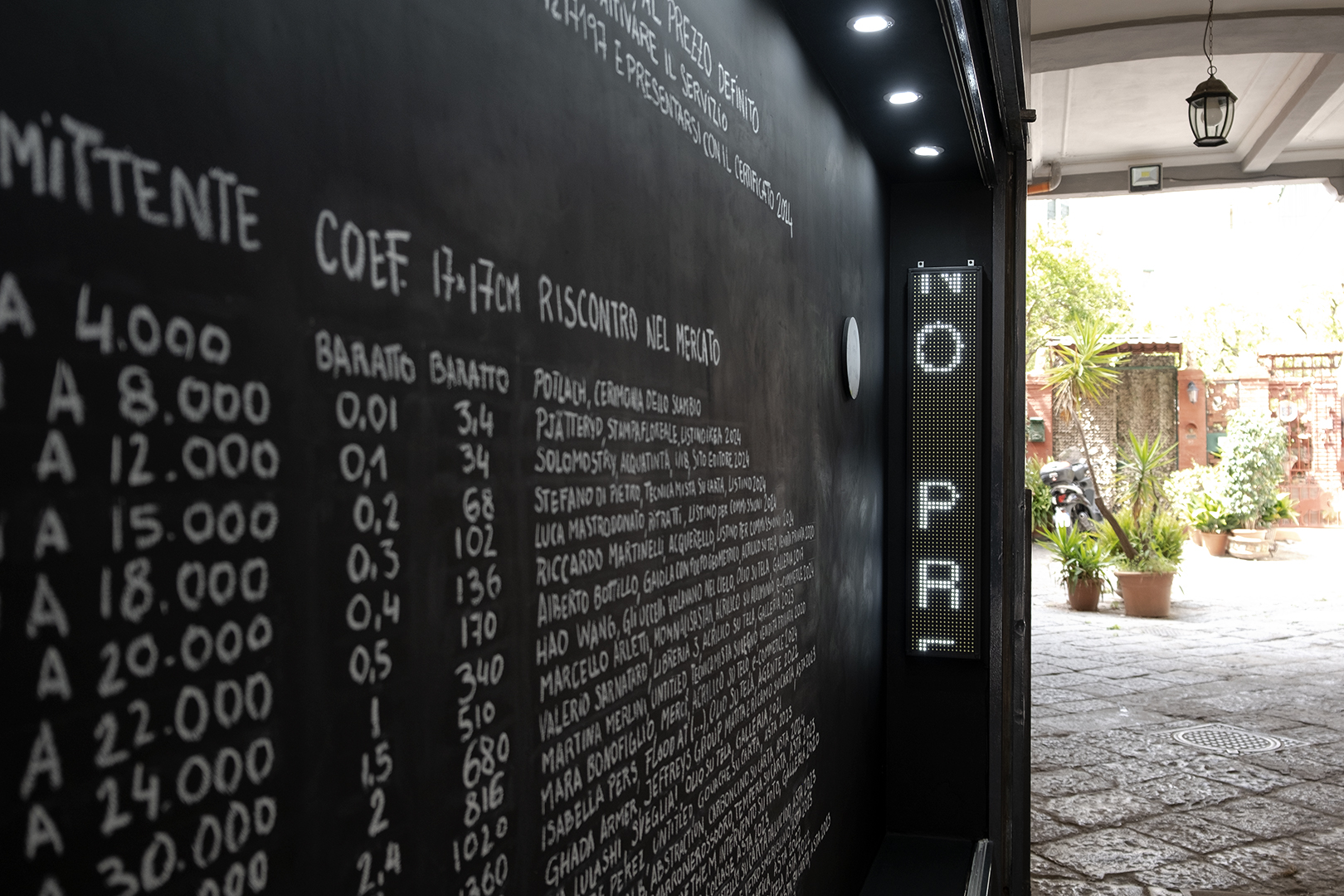
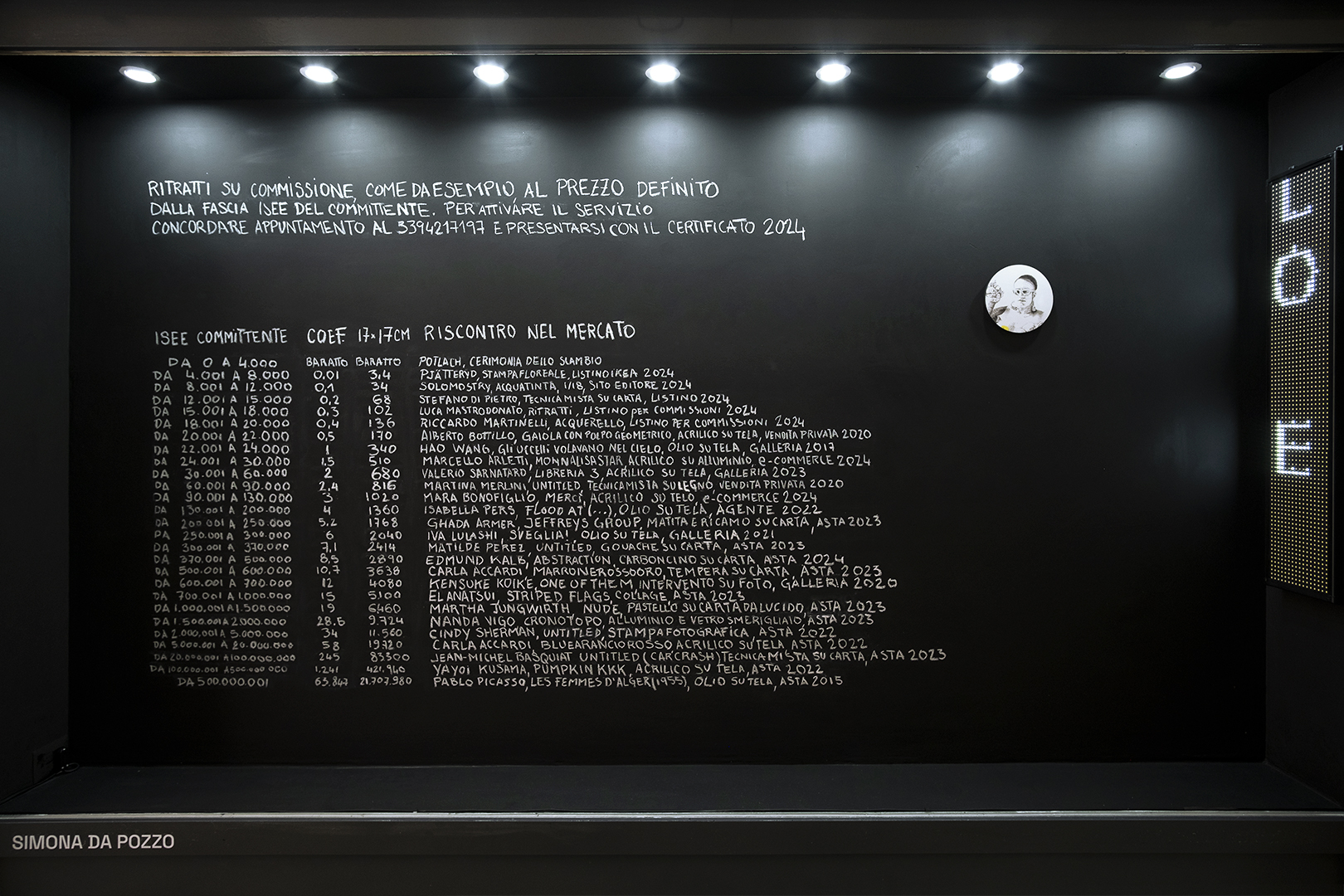
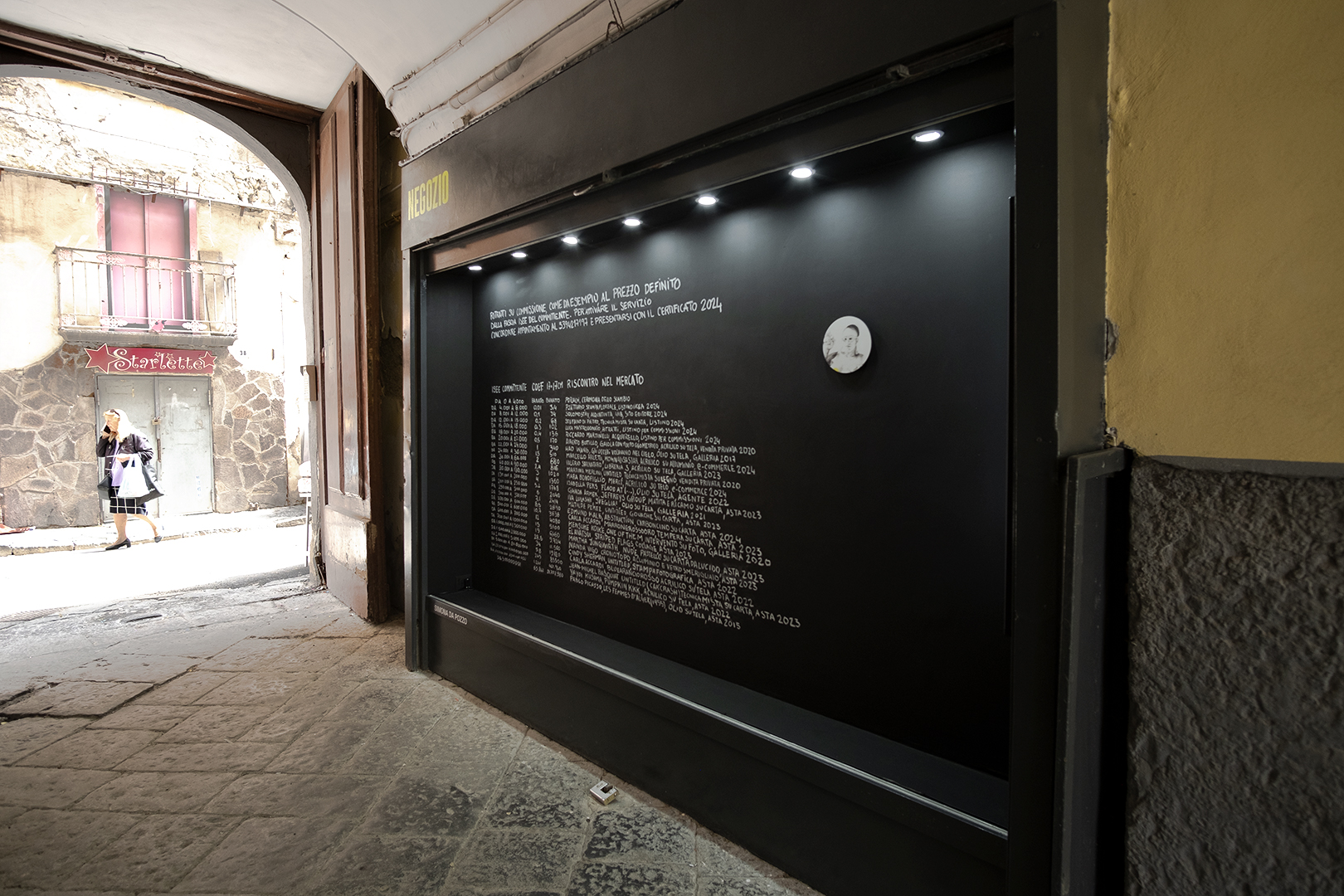
From Monday 6 May, NEGOZIO will be exhibiting the project  Protocollo e listino prezzi per un tentativo di equa accessibilità alla rappresent…

The work investigates value attribution systems by superimposing the bureaucratic mechanisms of the Ministry of Labour and Social Policies on those of the art market. Through the device of the shop window, the artist offers an ISEE service of the person portrayed. A drawing, a text and some practical information give passers-by the coordinates to activate the service.

image: detail of the installation

The intervention will be visible from Monday to Saturday 10am – 5pm and by appointment, from 6 May to 9 June at the headquarters of the Attiva Cultural Projects association in via Francesco Bellucci Sessa 23, Portici, (NA).

NEGOZIO is a project by damp collective

Ph: Alessandro Armento

Svelare // Ŏpĕra magazine #12

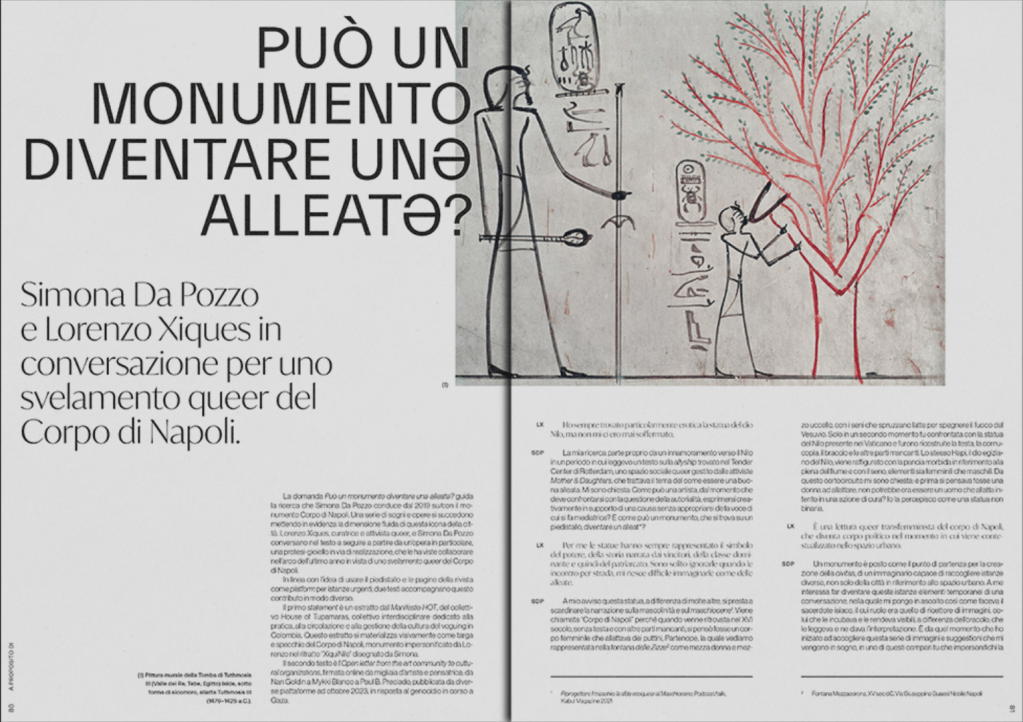
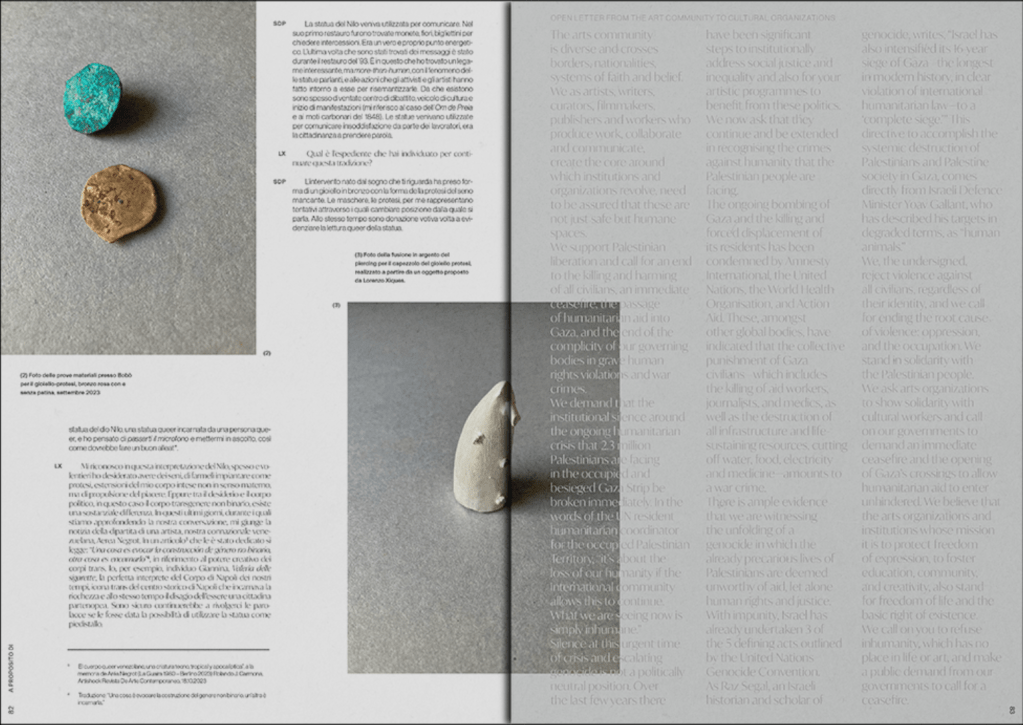
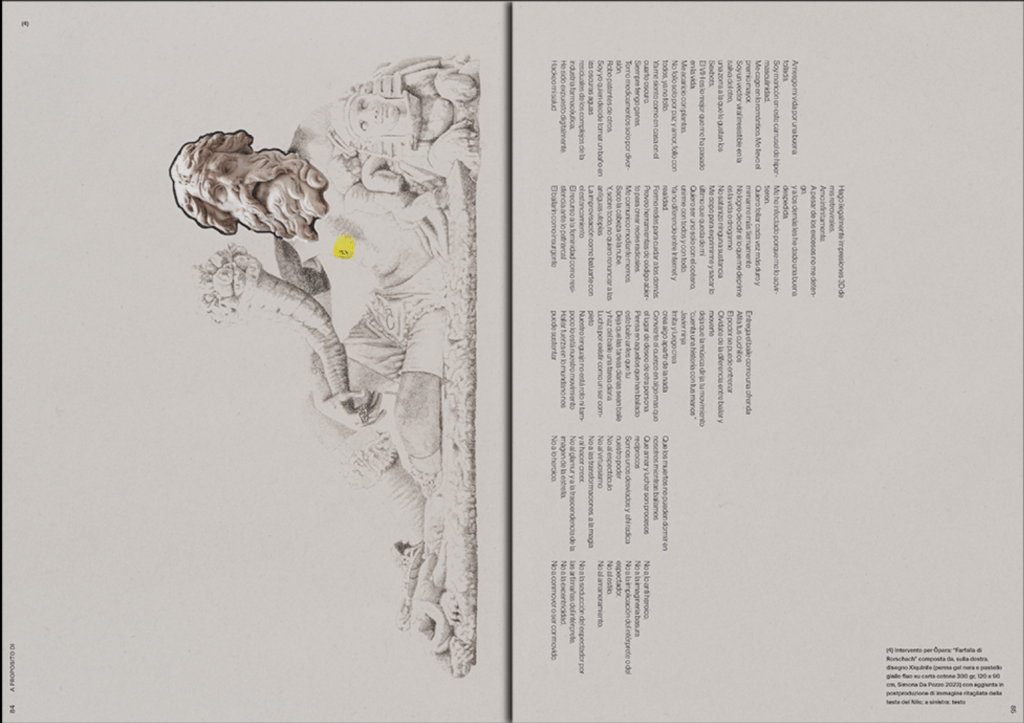
On the occasion of ART CITY Bologna, with a talk at Sof:tart Activa Cultural Project presents Ŏpĕra magazine #12. The talk will feature Lorenzo Xiques and Simona Da Pozzo, authors of the contribution “Può un monumento diventare unə alleatə?” (Can a monument become an ally?) for the column A proposito di.

February 3rd, 6:30 pm at Sof:Art, Corte Isolani 2F – 40125, Bologna

“In the 𝘼 𝙋𝙍𝙊𝙋𝙊𝙎𝙄𝙏𝙊 𝘿𝙄 ” column of Ŏpĕra 12, artist Simona Da Pozzo dialogues with queer curator and activist Lorenzo Xiques about the 𝘊𝘰𝘳𝘱𝘰 𝘥𝘪 𝘕𝘢𝘱𝘰𝘭𝘪, a famous monument in Naples which is depicted here in its fluid dimension.

LX: To me, statues have always represented symbols of power, of history narrated by the victors, of the ruling class, and thus of patriarchy. I usually ignore them when I encounter them on the street; it is difficult for me to imagine them as allies.

SDP: In my opinion, this statue, unlike many others, lends itself to dismantling the narrative of masculinity and the 𝘔𝘢𝘭𝘦𝘤𝘦𝘯𝘦. It is called ‘Corpo di Napoli’ because when it was discovered in the 16th century, headless and with other missing parts, it was thought to be a female body nursing putti […]”

From 𝘊𝘢𝘯 𝘢 𝘮𝘰𝘯𝘶𝘮𝘦𝘯𝘵 𝘣𝘦𝘤𝘰𝘮𝘦 𝘢𝘯 𝘢𝘭𝘭𝘺? by Simona Da Pozzo e Lorenzo Xiques


QUASI VERO

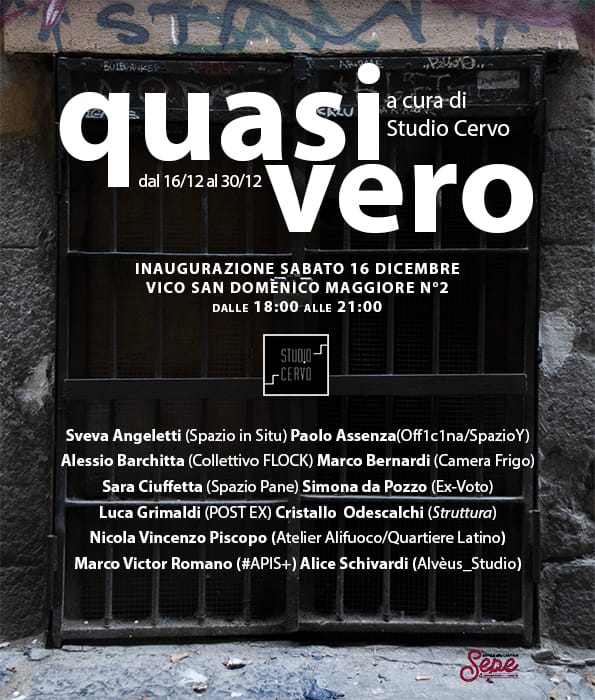
16 dicembre dalle 18:00 alle 21:00 Studio Cervo, vico San Domenico Maggiore 2, Napoli. In mostra dal 16/12/23 al 30/12/23:

Sveva Angeletti, Spazio In Situ, Roma; Paolo Assenza, off1c1na/Spazio Y, Roma; Alessio Barchitta, collettivo FLOCK, Barcellona P.G.; Marco Bernardi, Camera Frigo, Roma; Erika  Nevia CervoFabrizio CiceroSara Ciuffetta, Spazio Pane, Campoli Appennino; Simona Da Pozzo, Ex Voto, Napoli; Luca Grimaldi, POST EX, Roma; Cristallo Odescalchistruttura, Roma; Nicola Vincenzo Piscopo, Atelier Alifuoco/Quartiere Latino, Napoli; Marco Victor Romano, #APIS+, Benevento; Alice Schivardi, Alvèus_studio, Roma

Orari di apertura al pubblico: dal 16 al 30 dicembre, tutti i giorni (tranne il lunedì) dalle 10:00 alle 13:00 e dalle 14:00 alle 18:00

Sabato 16 dicembre dalle 18:00 alle 21:00 Studio Cervo presenta “quasi vero”, una mostra collettiva in cui display e opere dialogano senza prevaricazioni nei suoi spazi di recente strutturazione, in vico San Domenico Maggiore 2, nel cuore di Napoli. Lo spazio copre una vasta e labirintica area seminterrata, che un tempo fungeva da deposito di bare e che, dal 2005, è stato convertito in studio d’arte dalla Famiglia Cervo, che per l’occasione, apre al pubblico due locali.

Il progetto espositivo si presenta come un’esplorazione dall’interno dei meccanismi di produzione dell’opera e del luogo in cui tali processi avvengono. Con l’intento di dare nuovi significati all’idea di rappresentazione e approfondire, sondando le logiche che rispondono alle fenomenologie del mostrare, il ruolo che il display ha nell’atto espositivo, lo studio dei due artisti, Erika Nevia Cervo e Fabrizio Cicero, si offre al pubblico nella sua veste di non-finito, di laboratorio, emancipando il concetto di retroscena. In tale contesto si inseriscono e si stratificano le opere degli altri artisti e artiste invitati, tutti provenienti da realtà no-profit a carattere comunitario.

L’atelier d’artista, che sempre più spesso apre le sue porte al pubblico, diviene lo spazio del vivente, del non sistemato, del confuso, del dialogo implicito ed esplicito tra opere e oggetti, che si ricontestualizzano di volta in volta che lo sguardo cade su di loro.  Il titolo della mostra suggerisce una riflessione sul rapporto tra significato e linguaggio espositivo, tra immaginario collettivo e spettacolarizzazione, nel tentativo di riportare in auge la contaminazione e il dialogo tra opere.

Dove inizia e dove finisce il limite tra lo spazio di raccoglimento di un’opera e un’altra? Tra una pratica artistica e un’altra? E che ruolo gioca il display con la sua attitudine all’artificio? Una risposta comune potrebbe essere data dalla funzione che lo spettatore è chiamato oggi a svolgere, quella di non essere più solo davanti l’opera, ma dentro di essa, pronto all’interazione, a coglierne i processi che hanno portato alla sua creazione, problematizzando senso e rappresentazione.

Il progetto vuole presentarsi come un’occasione per discutere di come l’arte sia in grado di opporsi alla sua spettacolarizzazione e a ripensarsi come una forza vitale, in divenire e dialogante, che si pone oltre lo spettacolo del sé.